Harris Teeter
- 4.3
- Rating
- 1.00M
- Installs
- Free
- Price

 Analysis by App-foxy
When I want groceries without adding another stop to my day, Harris Teeter is the kind of app I consider first. Its main strength is simple but meaningful: it lets me arrange groceries for curbside pickup or home delivery from my phone. That focus makes it more useful than a basic store browser, especially when I already know what I need and want to turn a shopping trip into a short planning task.
I reviewed it as a food and drink app from The Kroger Co., and my impression is that it works best when convenience matters more than wandering through aisles. The app is free, rated for Everyone, and has reached over a million installs. Its average rating sits at 4.4 from around ten thousand ratings, which matches my general experience: it is a practical service with a clear purpose, though the quality of the experience depends heavily on how well the selected pickup or delivery option fits my schedule.
Why curbside pickup is the app’s most useful idea
The standout capability is not merely seeing groceries on a screen. It is being able to prepare an order in advance and choose between collecting it at the curb or having it brought to my home. That changes the shopping routine in a very specific way. Instead of spending time walking through the store, comparing every shelf, and waiting at checkout, I can make the important decisions before leaving the house.
You May Also Like

 Google Keep - Notes and lists
Google Keep’s Quiet Growth Shows the Appeal of Simpler Notes
As mobile work gets busier, Google Keep keeps winning a simple contest: capture a thought quickly, find it later, and get on with the day.

 Blood Strike: 2.5 Anniversary
Blood Strike’s Loadouts Turn Every Drop Into a Tactical Gamble
A close look at Blood Strike’s custom loadouts: how fast access to signature weapons reshapes its battle royale rhythm, rewards preparation, and narrows the gap between fights.

 Pandora - Music & Podcasts
Pandora’s Music Is Easy to Start, but Harder to Recover
Pandora’s strength is its low-effort path from a seed to a station. Its weak spot is how much confidence it asks you to place in connection, setup, and quiet recovery.

 8 Ball Pool
 Is Built on Rivalries, Rematches, and Routine
A close look at the rivalries, rematches, shared routines, and unanswered safety questions that turn a quick pool match into a persistent mobile community.

 Samsung Music
’s Quiet Strength Is Playing What You Already Own
Its reach comes less from spectacle than from dependable access to a personal library. That simplicity is both the app’s strongest retention engine and its ceiling.

 AccuWeather: Weather Radar
AccuWeather Review: A Quick, Clear Forecast for Everyday Decisions
For everyday plans, the best forecast is the one you can understand quickly. AccuWeather makes rain timing, radar, and local conditions easy to act on, with a few trade-offs.
More From Our News Desk



For me, the biggest benefit is control over the shape of the errand. A normal grocery visit often expands because I notice extra items, lose track of what I already picked up, or have to wait behind other shoppers. Harris Teeter gives the trip a defined beginning and end: build the basket, select the fulfillment method, and follow the instructions for receiving it. That is especially helpful on busy weekdays, when the value is not only saving minutes but also avoiding an interruption to the rest of the day.
The real advantage is turning grocery shopping into a scheduled handoff rather than a full store visit. That distinction matters. Someone who enjoys browsing fresh produce or discovering new products may find the app less satisfying than shopping in person. Someone who wants a repeatable weekly routine is much more likely to appreciate it.
The app is also more appealing for households that buy familiar items regularly. A planned basket is easier to assemble when I have a mental list of staples, breakfast foods, drinks, and dinner ingredients. In that situation, the phone becomes a planning tool rather than a replacement for every part of the shopping experience. I decide what the household needs, then use the app to reduce the physical effort required to obtain it.
What the ordering routine feels like
I would approach Harris Teeter by first deciding whether I need pickup or delivery. Pickup makes sense when I will already be near the store or want to avoid delivery-related logistics. Home delivery is more attractive when leaving the house is inconvenient, when I am caring for children, or when carrying groceries would be difficult. The choice is not a minor detail; it determines whether the app saves me travel time, shopping time, or both.
After choosing the arrangement, I would build the order with a written list beside me. This is one of my practical recommendations because browsing without a plan can make digital grocery shopping feel just as distracting as walking through a store. A list also makes it easier to notice when a basket is incomplete before the order is finalized. I would group the list mentally by meal or household need rather than adding items in a random sequence.
That workflow is particularly useful for a weekly shop. I can think through breakfasts, lunches, dinners, snacks, and household basics before committing to the order. It also helps when another person in the home contributes items. Instead of sending several separate messages throughout the day, I can collect requests into one organized shopping session.
For a small top-up, the value is different. If I only need one or two items, opening an app and arranging fulfillment may feel slower than buying them during an existing trip. Harris Teeter is most convincing when the order is large enough that avoiding the aisles, checkout line, or drive to the store makes a noticeable difference.
A realistic weekday example
Imagine I finish work late, have ingredients at home for dinner, but realize I am missing several items for the next morning and the following day. A traditional solution would be to drive to the store, walk through the aisles, wait to pay, and return home before cooking. With Harris Teeter, I can prepare the grocery list from the sofa, select the option that fits my evening, and keep the errand separate from dinner preparation.
In that situation, the app’s value is not just convenience in the abstract. It reduces the number of decisions I must make while tired. I do not need to decide which aisle to visit first, whether I should abandon the basket because the checkout is crowded, or how much time the trip might take. The order still requires attention, but the attention is concentrated in planning rather than movement.
For a parent, the same workflow can be even more useful. Keeping children in the car while collecting groceries may be easier than bringing them into the store, while home delivery can remove the trip altogether. For an older adult or anyone with limited mobility, the ability to arrange a grocery handoff can reduce the physical demands of shopping. These are not minor conveniences; they can determine whether a normal grocery run feels manageable.
Small habits that make the service work better
I would not treat the app as a place to improvise an entire meal without preparation. My better approach is to check the pantry and refrigerator first, then make a short list of exact needs. This avoids ordering duplicates and makes the digital basket easier to review. I would also leave a little time between placing an order and needing the groceries, rather than planning around an unrealistically tight schedule.
Another useful habit is to review the basket as if I were checking a paper list before leaving a store. I look for missing basics, duplicate items, and ingredients that only make sense if another item is present. This is an easy step to skip because the app makes adding products feel quick. Yet the convenience of ordering does not remove the need for a final human check.
I also prefer to separate urgent items from flexible ones. If dinner depends on a particular ingredient, I would not build the entire evening around a last-minute order. For flexible household shopping, the app is a stronger fit because a small change in timing is less disruptive. That trade-off is important for anyone considering delivery as a complete replacement for ordinary shopping.
Where Harris Teeter feels better than the usual alternatives
Compared with visiting the store without a plan, Harris Teeter gives me a calmer and more deliberate process. Compared with a general delivery marketplace, a store-focused app feels more appropriate when I already want to shop from Harris Teeter rather than compare several retailers. The advantage is concentration: the experience is built around getting groceries from this particular store through pickup or delivery.
That focus can also be a limitation. If my priority is finding the lowest price across several supermarkets, a comparison-oriented service may be more useful. If I need specialty products from different stores in one order, a single-store app may not cover the whole task. Harris Teeter is not the universal answer to grocery shopping; it is a convenient channel for people who are happy to source their order through Harris Teeter.
It also differs from a paper list in an important way. A paper list tells me what to buy, while the app connects that list to fulfillment. That saves effort, but it also means I am depending on the app and the selected service to complete the final step. I gain convenience by accepting a little less direct control over the shopping process.
The trade-offs I noticed
The largest trade-off is that convenience does not guarantee a perfect match between my planned basket and what I would personally choose in the store. When shopping in person, I can inspect products directly and change my mind immediately. With pickup or delivery, I need to be comfortable making decisions through the app and accepting that the handoff is the important moment rather than the browsing experience.
Timing is another consideration. A scheduled grocery service is helpful only when its timing works with my day. If I need food immediately, or if I am already passing a store, the traditional option may be faster. I would also avoid relying on the app for a meal with no flexibility when a missing item could spoil the plan. The app reduces shopping friction, but it cannot remove every uncertainty from grocery fulfillment.
There is a mental trade-off as well. Digital ordering can encourage me to focus on individual items instead of the whole household routine. I may remember the main ingredients and overlook breakfast supplies, cleaning products, or something needed later in the week. A careful list solves much of this, but the app works best when I bring a little organization to it.
People who enjoy browsing should think about what they are giving up. In-store shopping makes it easy to notice seasonal choices, compare packaging, or respond to what looks appealing that day. Harris Teeter’s pickup and delivery approach is better for intention than discovery. I see that as a strength for routine shopping, but a weakness for shoppers who treat the store visit as part of the experience.
Who will get the most from it
I would recommend Harris Teeter to busy households, commuters, parents, caregivers, and anyone who wants to reduce the physical and time cost of a regular grocery run. It is especially suitable for people who already shop at Harris Teeter and prefer to plan familiar purchases. The app also makes sense for anyone who finds crowded stores, checkout queues, or carrying several bags particularly inconvenient.
It may be a good fit for a weekly routine rather than a spontaneous one. I can imagine using it to prepare a predictable order before the weekend, then choosing pickup when I am nearby or delivery when staying home is more valuable. The more repeatable the shopping list, the less effort the app requires from one order to the next.
I would be more cautious about recommending it to someone who compares prices across many stores, needs unusual products from several retailers, or prefers selecting every item personally. It is also not the best choice for a tiny emergency purchase if visiting a nearby store is already easy. In those cases, the app’s planning step may outweigh the convenience of avoiding the aisles.
Device support and overall polish
Harris Teeter has been available since March 2011, and the current version is 95.0. It supports Android 8.0 and later, which makes it accessible to people using older compatible Android phones as well as newer devices. I appreciate that the app is not positioned only for early adopters or high-end hardware; its basic purpose is ordinary grocery planning, and the technical requirements reflect that everyday role.
The free price also lowers the barrier to trying it. The age rating of Everyone makes sense for a household shopping tool, since its purpose is ordering food and arranging fulfillment rather than presenting mature entertainment. Its user numbers and rating suggest that it has become a familiar option for a substantial audience, although I would still judge it by my own shopping habits rather than popularity alone.
My main advice is to start with a modest order and learn which fulfillment method fits your routine. That first test can answer the practical questions that matter most: whether pickup suits your travel pattern, whether delivery is worth the convenience for your household, and whether digital list-building feels easier than your current method. Once that is clear, the app becomes more useful as part of a repeatable routine.
My recommendation
Harris Teeter succeeds because it concentrates on one meaningful problem: getting groceries without requiring me to complete the entire shopping trip inside the store. The curbside pickup and home delivery options are most valuable when I plan ahead, shop from a familiar list, and have a schedule that allows the handoff to fit naturally into my day.
I would choose it for a planned weekly shop, a demanding weekday, or a situation where carrying children or heavy bags through a store would create unnecessary difficulty. I would skip it for a very small urgent purchase, a multi-store price hunt, or a trip where browsing and inspecting products are part of what I want. That balance is what makes the app worth recommending: it is not trying to replace every kind of grocery trip, but it can make the routine ones noticeably easier.
Overall, I see Harris Teeter as a practical Food & Drink app rather than an app I would open for entertainment or exploration. Its value appears when I use it deliberately: check what is already at home, prepare a complete list, choose pickup or delivery based on the day, and leave enough flexibility for the order to fit my schedule. For that kind of shopper, Harris Teeter is a sensible free tool from The Kroger Co. that turns a time-consuming errand into a more manageable part of the week.
FAQs for Harris Teeter
01What is the Harris Teeter app used for?
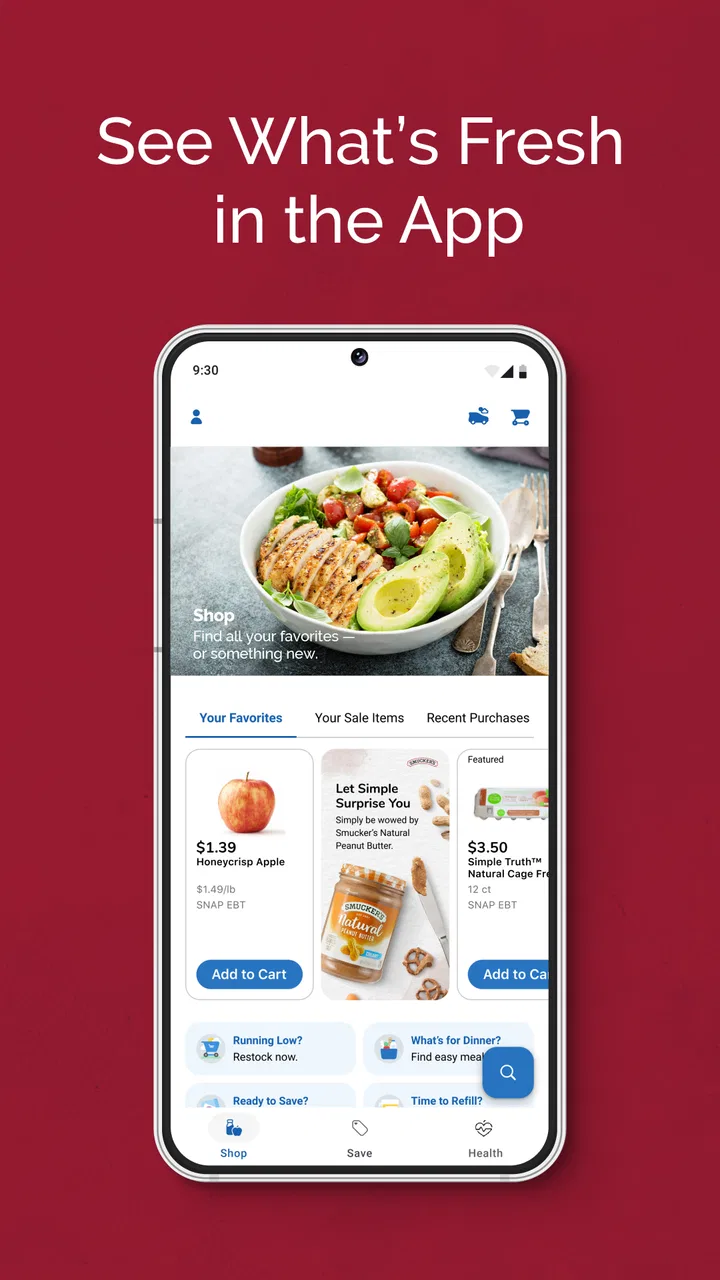
The Harris Teeter app is designed to enhance your grocery shopping experience by allowing you to browse weekly ads, create shopping lists, and access exclusive discounts. The app also offers features like online ordering for pickup or delivery, making it convenient to shop for groceries without leaving your home.
02How do I use the Harris Teeter app to place an order?
To place an order using the Harris Teeter app, simply browse the product categories or use the search bar to find items. Add your selections to the cart, then choose between pickup or delivery options. Follow the prompts to select a time slot, enter payment information, and confirm your order.
03Does the Harris Teeter app offer any loyalty rewards?
Yes, the Harris Teeter app integrates with the e-VIC rewards program. By linking your e-VIC account, you can access personalized deals, track fuel points, and receive digital coupons. These rewards are automatically applied at checkout, allowing you to save more on your grocery purchases.
04Is the Harris Teeter app available for both Android and iOS devices?
The Harris Teeter app is available for download on both Android and iOS platforms. You can find it on the Google Play Store for Android devices and the Apple App Store for iOS devices. Ensure your device meets the app's system requirements for optimal performance.
05Are there any fees associated with using the Harris Teeter app?
The Harris Teeter app itself is free to download and use. However, fees may apply for specific services like delivery. It’s important to review the terms and conditions related to pickup or delivery services within the app to understand any additional charges that may apply.
Pros
- User-friendly interface for easy navigation.
- Wide variety of products available.
- Weekly deals and promotions.
- Easy-to-use digital coupons.
- Efficient in-app shopping list feature.
Cons
- Occasional app crashes reported.
- Limited payment options available.
- Inconsistent delivery times.
- Some features require account setup.
- Location services needed for full use.

Harris Teeter
Gallery